


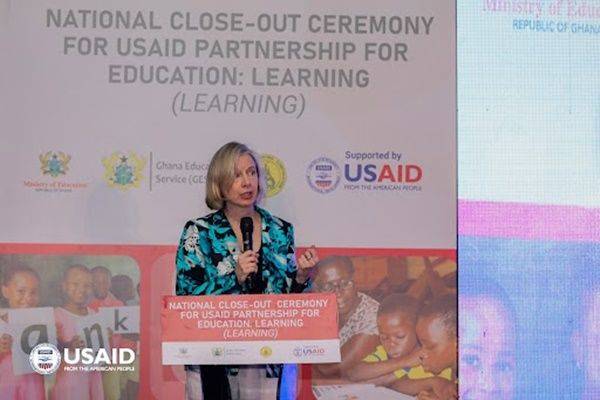
More than 68,000 Ghanaian teachers have been taught nationwide through an educational collaboration with the education ministry, according to Kimberly A. Rosen, director of missions for the United States Agency for International Development (USAID).

She claims that since 2014, the program has touched over 750,000 kids from kindergarten 2 through basic 2 in more than 7,200 schools throughout Ghana and trained more than 68,000 teachers, headteachers, and curriculum heads.
She stated that "reading at a young age enhances educational outcomes and long-term livelihoods, helping communities across Ghana" during an event that was co-hosted by the Ministry of Education.
We are devoted to helping the Ghanaian Ministry of Education (MOE) and its agencies raise reading proficiency among youngsters.
One of the most important collaborations between Ghana and the US is the Learning Activity between USAID and Ghana's MOE.

This week, the USAID Partnership for Education Learning Activity was concluded with the participation of the Minister of Education, Dr. Yaw Adutwum. She added that this eight-year partnership supported the Ministry of Education (MOE) and aimed to enhance students' reading abilities in 11 Ghanaian languages in addition to English.
One of the most important collaborations between Ghana and the US is the Learning Activity between USAID and Ghana's MOE. Over 15 million high-quality teaching and learning reading resources, including classroom supplies and braille materials for children who are blind or visually impaired, were made available through the activity.
Over 1.6 million students who would not have otherwise been able to access literacy programs benefited from the USAID partnership with the MOE, the Ghana Education Service, and the Ghana Broadcasting Corporation (GBC) to launch the National Reading Radio Program (NRRP) at the height of the COVID-19 pandemic.

After the radio courses had been broadcast for a year, in January 2022, 57% of kids had improved their English reading scores, which helped to lessen learning loss during the epidemic.