


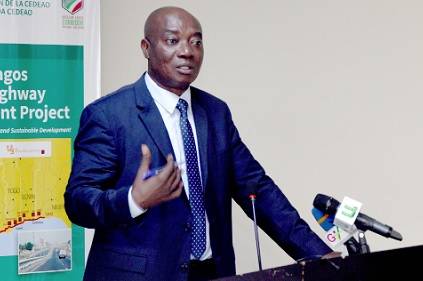
Participants in the Abidjan-Lagos Corridor Highway Development Project have gathered in Accra to provide design comments and compile the paperwork needed to secure funding for the project.
This will open the door for the much-anticipated corridor highway to be built, which has the potential to revolutionize West Africa's supply chain infrastructure.

The 1,028-kilometer road project connecting Benin, Cote d'Ivoire, Ghana, Nigeria, and Togo will be discussed by the stakeholders, who include ministers in charge of roads and infrastructure in the five recipient nations.
Opening
The Chief Director of the Ministry of Roads and Highways, Dr. Abass M. Awolu, declared yesterday that the nation's project team has To guarantee a smooth building phase, sensitization of pertinent and impacted groups was carried out as part of the land acquisition procedure.
The fact that this project crosses one of Ghana's most crucial road corridors, which has been rated as a high priority for the nation's economic growth, makes it tremendously essential to the country.
We are thus interested in the project's development and pray that all of the member states will remain dedicated to this objective, the speaker stated.
Protection
He said that "we will not allow any other development to go on" after promising that the government would safeguard the corridor's slots.
Although certain farmlands might be impacted by the procedure, Dr. Awolu highlighted that steps were being taken to limit the effects of the project on people and property.
"I sincerely believe other member states have equally completed the tasks assigned at the previous meeting to pave the way for the next steps," the speaker continued.
Status
The project is moving quickly towards the design phase, according to Chris Appiah, the interim Director of Transport for the ECOWAS Commission. The team has finished the technical and feasibility phases of the project.
He disclosed that the group was now putting the finishing touches on the bid paperwork in order to start investment mobilization.
According to the money for the technical studies alone, the initiative is a top priority for the leaders of the participating countries, he continued.
With the Ghanaian government providing a grant of $1.4 million, the European Union had invested around $38 million in the project's initial stages.
In addition, he added, ECOWAS has agreed to spend $200,000 annually to assist in project coordination.
He said that heads of state had committed to the problems of compensation and resettlement and that others had launched several public awareness campaigns to raise awareness among traditional leaders and the general public in order to prevent investment losses.